

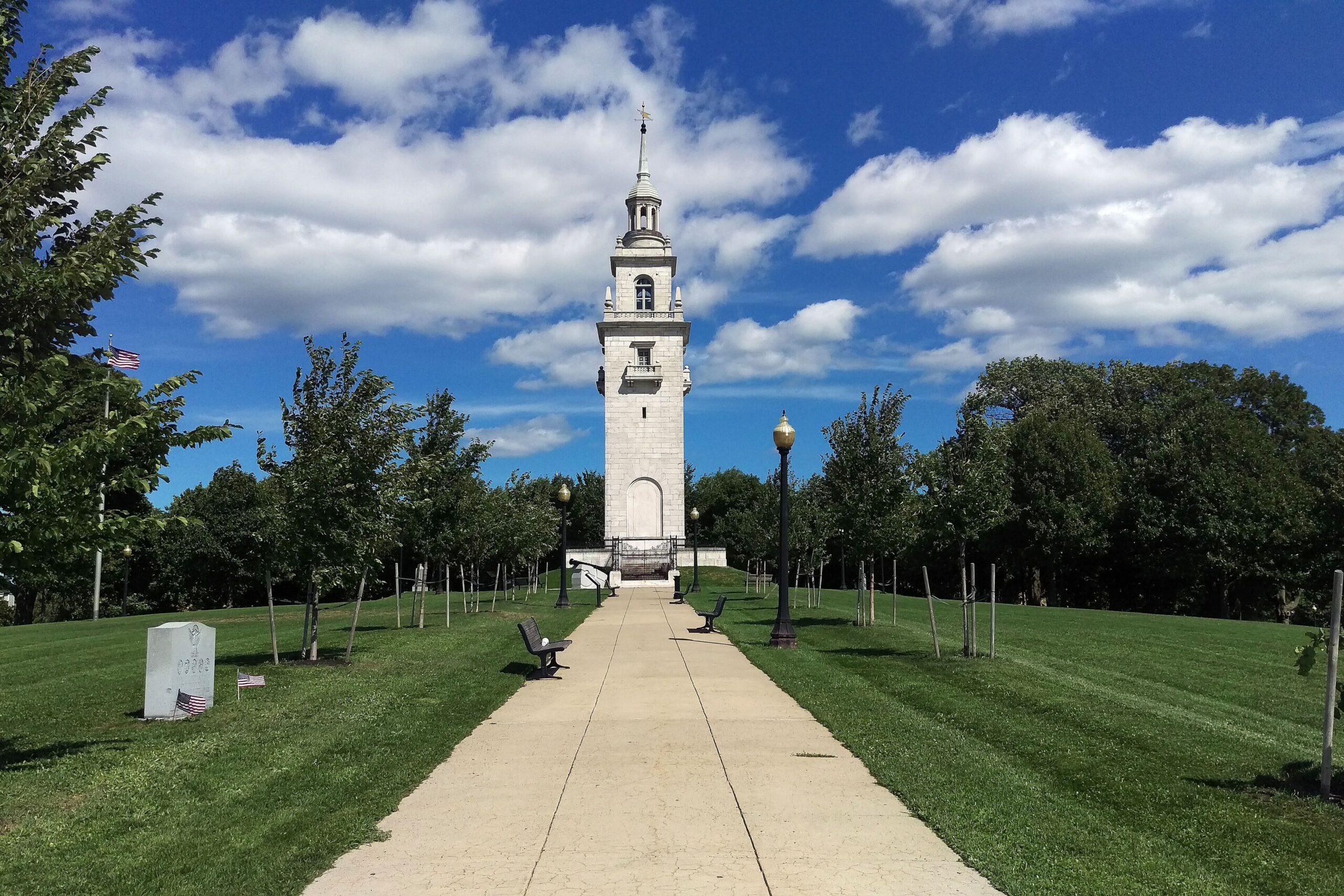
Dorchester Heights — a short stop above South Boston
Washington picked Dorchester Heights for a reason. The hill clears the harbor, holds the high ground over the anchorage, and gives anyone standing at the top a clean line of sight to every ship below. On the night of March 4, 1776, his men moved fast — oxen hauled the Ticonderoga guns up the slope while the rest of the army kept fires burning along the Cambridge line to cover the noise. By first light the British commander looked up from the deck and understood immediately what had happened. He loaded his troops and left Boston within two weeks.
Thomas Park sits at the top of that same hill today. Visitors park below, walk the path up in under five minutes, and reach the marble monument at the crest. From there the view runs east to the harbor, north to downtown, and across South Boston’s flat grid below. Most people stop, read the plaque near the base, take a photo, and come back down. The whole visit runs twenty minutes.
The National Park Service keeps the grounds open year-round. The tower itself stays locked, but the paths around it stay clear. On weekends local families cut through the park, dogs run the perimeter grass, and the benches fill when the sun holds. Nobody sells tickets. Nobody manages a queue.
Dorchester Heights fits naturally into a longer South Boston morning—Castle Island sits two miles east, and Broadway’s coffee shops run three blocks north. Visitors who plan two or three stops in sequence often skip the parking puzzle entirely and book a ride with Boston Town Car instead. The driver handles the routing, the stops connect without gaps, and the day runs on its own schedule.