

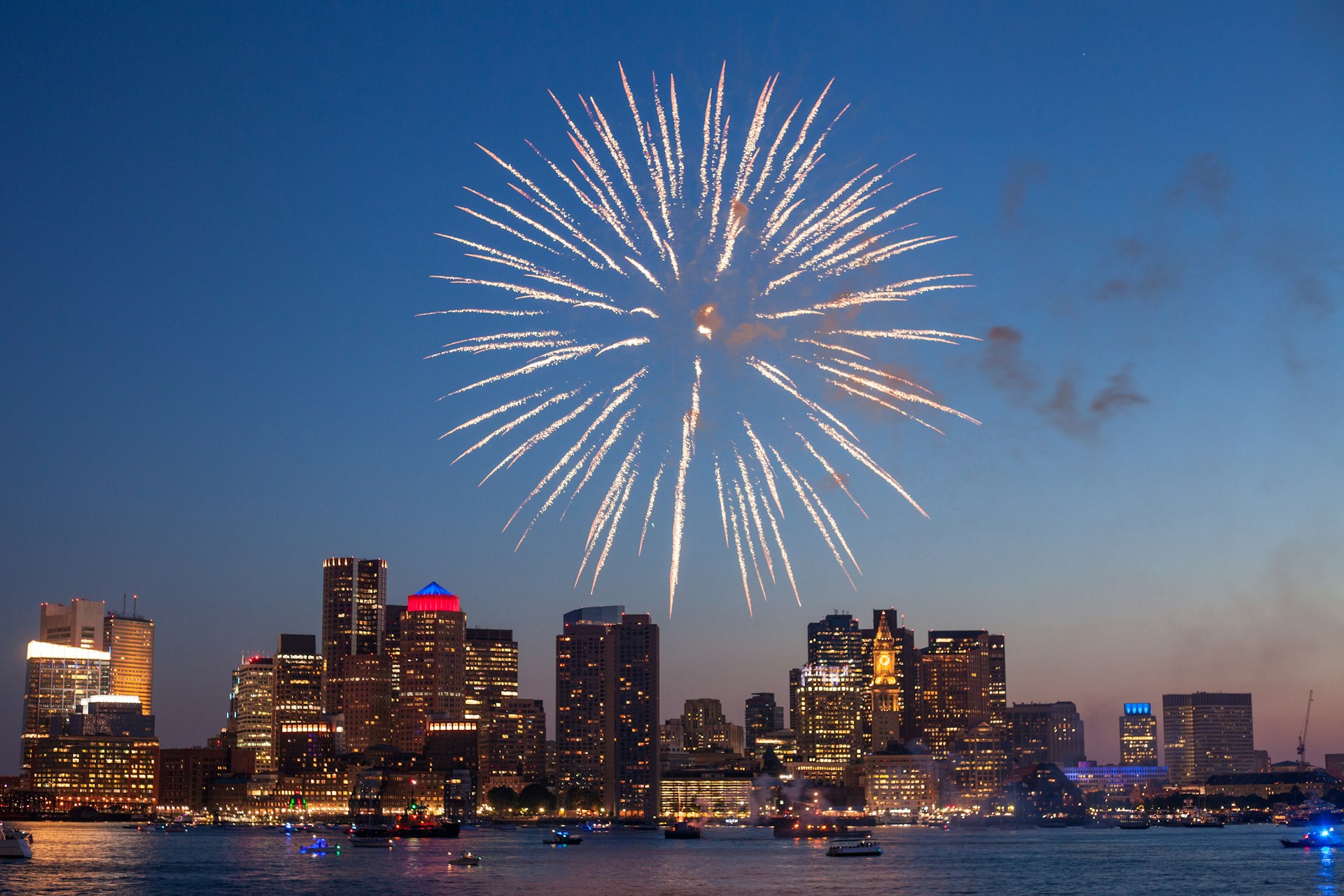
250 Years and Counting: Fourth of July on the Esplanade
Two hundred and fifty years ago, fifty-six men signed a document in Philadelphia and changed everything. Boston heard the news before the ink dried—the Declaration was read aloud from the State House balcony on July 18, 1776, and the crowd in the street below responded the way Boston crowds always do. Loudly.
The city has been marking the date ever since. July 4 on the Esplanade draws somewhere between 400,000 and 500,000 people to the Charles River banks for the Boston Pops concert and the fireworks that follow. No other Fourth of July celebration in the country runs quite like this one—the Pops have played on the same stage since 1929, and the fireworks launch from barges anchored in the river, so the reflections hit the water and double the show.
Storrow Drive closes to traffic for the event. The T runs packed trains until well past midnight. Hotel guests, families with strollers, visitors who flew in from other cities—everyone solves the same problem: how to get to the Esplanade before the crowd locks the streets down and how to get back after the finale without standing in a bottleneck for an hour. Boston Town Car runs drop-offs near the river before the concert starts and picks up after the fireworks end—a fixed route, no surge, no guessing.
The 250th anniversary puts a different weight on this particular July 4. Half a millennium of American history lands on the same riverbank where the Pops play every summer. Boston Town Car runs event transportation to the Esplanade—drop-off before the concert and pickup after the finale. The fireworks are Boston’s. The ride is ours.