
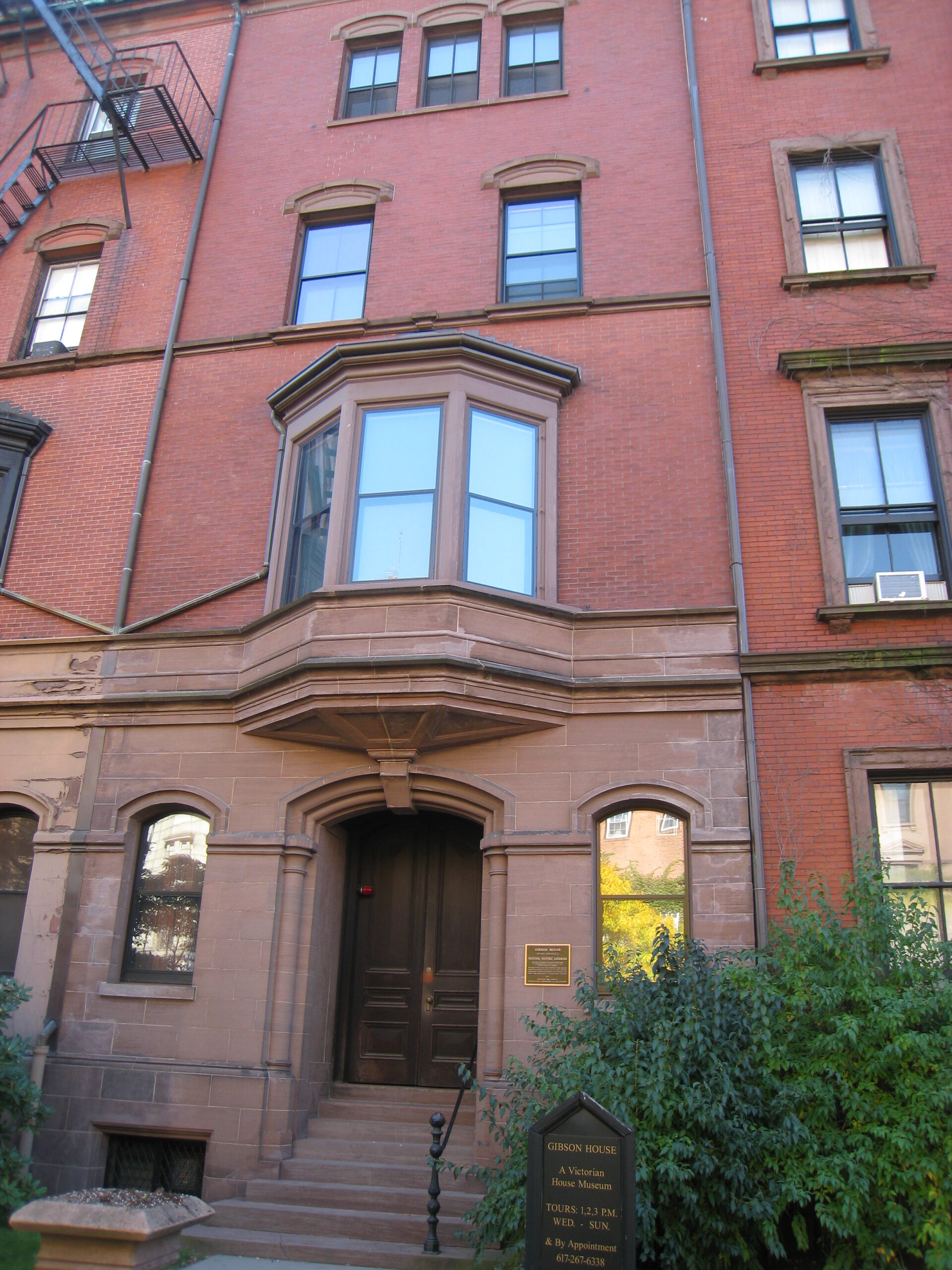
Back Bay’s Quiet Stop: Gibson House Museum
Boston puts a lot of history into a small area. The Freedom Trail runs two and a half miles through the city center. Paul Revere rode from the North End. The tea went into the harbor at Griffin’s Wharf. Back Bay came later—landfill and brownstones, built out through the second half of the 1800s. Most of those buildings changed hands many times. Offices moved in. Apartments got carved out of the upper floors. One house on Beacon Street went a different way.
The Gibson family hired Edward Clarke Cabot to design 137 Beacon Street. Construction finished in 1860. Three generations of Gibsons lived there—the neighborhood around them changed, the city changed, but the family stayed on Beacon Street. The last of them left in 1954. They took their personal effects. The furniture stayed. The carpets stayed. The wallpaper stayed. Three years later the house opened as a museum, and the rooms looked the way they always had.
Visitors walk through both sides of how a nineteenth-century Boston household ran. The front parlors held company. The wallpaper and chair arrangements told guests something about the family’s taste and standing. The kitchen ran separately from all that. Meals came out of it three times a day. Laundry moved through the back rooms on a different schedule. Gibson House keeps both sides of that story on view at the same time.
Beacon Street puts visitors close to several other stops. The Public Garden sits a few blocks west. Newbury Street runs parallel, one block south. Copley Square adds another ten minutes on foot. Visitors covering Back Bay in one morning often book a car rather than walk the full loop. Boston Town Car handles sightseeing transportation across the neighborhood—Gibson House to the Garden, then on to Copley or wherever the afternoon takes the itinerary.