

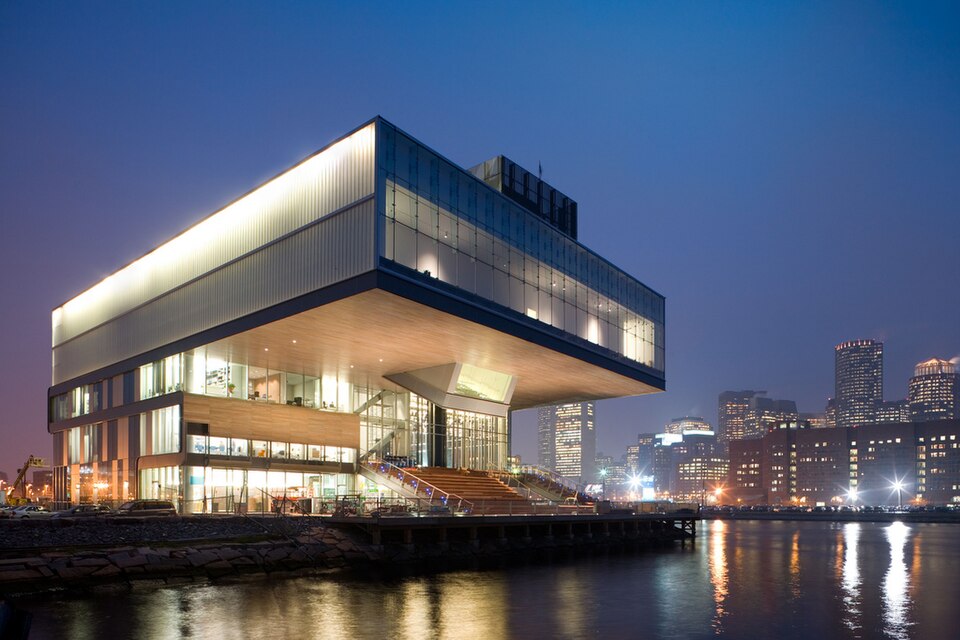
Institute of Contemporary Art Boston on the Waterfront
A trip to the Institute of Contemporary Art usually starts before the first gallery wall. The building itself participates in the work. The building stands out on the waterfront, rises over the edge of the harbor, and alters the pace before anyone even steps inside. A museum visit here does not feel sealed off from the city. The water stays close, the light continues to shift, and the whole stop feels tied to Boston rather than cut away from it.
That matters on a day when the city feels crowded or overplanned. ICA works well because the visit does not need a heavy schedule. People can arrive, walk through a few rooms, stop at a window, move again, and let the place set the rhythm. Some museum trips ask for stamina. This one asks for attention.
The galleries tend to reward short pauses more than marathon viewing. A visitor can take in one installation, step away from it, look out at the harbor, and return with a different eye. That pattern suits the museum. It provides a space to think without forcing a lesson. Even people who do not usually build a day around contemporary art often discover their way into it here because the building keeps the visit open and moving.
The area around the museum helps too. A walk along the waterfront can extend the outing without turning it into a second destination. The museum gives the day a center, and the harbor gives it air. That combination works especially well when someone wants a city plan that feels calm instead of packed.
Boston Town Car fits this kind of museum trip because timing matters more than complication. A simple ride in or out keeps the visit focused on the waterfront, the galleries, and the pause the museum creates, instead of parking, traffic, and the usual downtown shuffle.